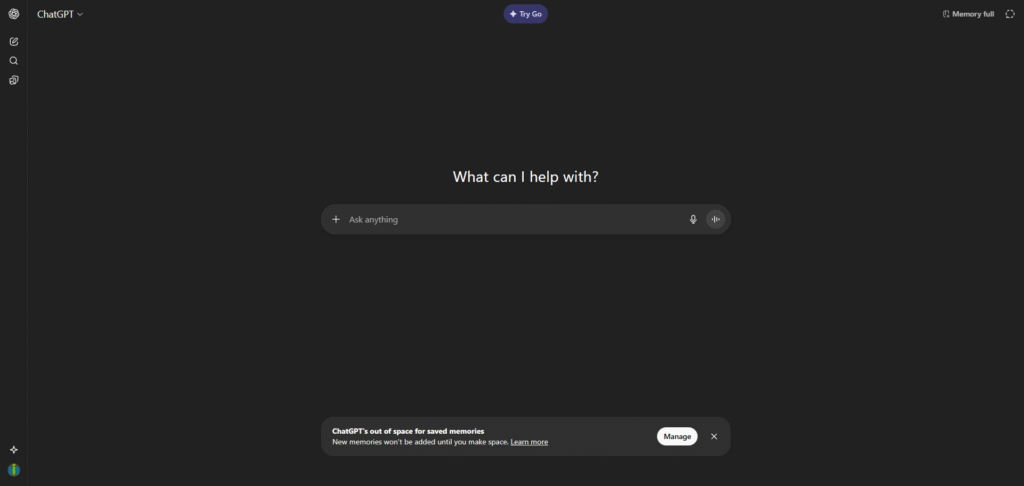
ChatGPT is a generative artificial intelligence chatbot developed by OpenAI, built on the GPT (Generative Pre-trained Transformer) architecture. Launched in November 2022, it enables users to engage in natural-language conversations, ask follow-up questions, seek explanations, generate creative content, and get help with coding, writing, research, and more.
Unlike static information retrieval tools, ChatGPT understands context across turns, maintains conversation threads, and adapts to varied tones—from casual chat to formal analysis. It has become a mainstream tool for professionals, students, content creators and businesses looking to augment productivity and creativity.
Features
- Context-aware Conversational Responses
ChatGPT tracks dialogue history, allowing follow-up questions, refined answers and multi-turn interactions that feel natural and human-like.
- Multimodal Inputs & Outputs
In supported versions, ChatGPT can handle text, image, audio or voice prompts and provide corresponding responses—expanding use-cases beyond simple text chat.
- Prompt-Driven Content Generation
Users can ask ChatGPT to draft essays, blog posts, code snippets, marketing copy, or creative writing, using custom instructions and desired tone.
- Real-Time Web & Research Integration
With recent updates (e.g., ChatGPT Atlas), the tool can browse web content, summarise search results and integrate external data into responses.
- Adaptive Learning & Personalised Memory
Through memory features, ChatGPT can retain user preferences (if enabled) and deliver more customised answer styles or follow-ups.
- Enterprise-Grade Accessibility & Integrations
ChatGPT supports APIs, plugin integrations, and deployment in work-flows, enabling businesses to embed conversational AI in chatbots, help desks or customer-facing systems.
Use Case
- Content creators & writers use ChatGPT to brainstorm topic ideas, draft articles, improve readability, and optimise tone.
- Developers & coders rely on ChatGPT for code suggestions, bug fixes, documentation and learning new programming languages.
- Students & educators leverage it to create summaries, practise Q&A, construct study guides, and enhance learning flow.
- Customer support & business teams deploy ChatGPT in chatbots or assistants to provide instant responses, automate workflows and reduce repetitive tasks.
- Researchers & analysts use it to process large text inputs, generate reports, translate content and surface insights faster than manual effort.
Advantages
- Produces human-like, fluent text quickly — saving time and boosting productivity.
- Supports a wide range of tasks from creative writing to technical assistance and conversation.
- Constant updates and model improvements mean new features (multimodal input, web browsing) are added regularly.
- Accessible via web, mobile apps and APIs — flexible deployment for individual or organisational use.
- Freemium model enables casual users to access core features before moving to premium.
Disadvantages
- Accuracy is not guaranteed — ChatGPT sometimes produces plausible but incorrect or misleading responses (“hallucinations”).
- It may struggle with very specialised, domain-specific or highly technical topics without expert review.
- Free version has usage limits and may provide slower responses during peak times.
- Because it’s a generalist model, creative style or niche tone may require significant user editing.
- Privacy and data sensitivity concerns persist—users must evaluate how they share confidential or proprietary information with AI systems.
FAQ
- What is ChatGPT used for?
ChatGPT is used for conversational AI tasks: generating text, answering questions, drafting content, coding help, summarising documents and more.
- Is ChatGPT free?
Yes. OpenAI offers a free tier of ChatGPT with basic capabilities. For enhanced features (faster responses, longer context, advanced models) paid subscriptions are available.
- Can ChatGPT understand images or voice?
Yes—depending on the version, ChatGPT supports image upload, voice or audio input, and can generate responses accordingly.
- Is ChatGPT safe for business use?
ChatGPT has enterprise-grade integrations, but organisations must implement data governance, review generated content for accuracy, and ensure it meets compliance and privacy standards.
- Can ChatGPT replace human writing or coding entirely?
No. While ChatGPT greatly accelerates tasks, human editing, oversight, fact-checking and creative judgement remain essential to ensure quality, originality and ethical usage.